Tuesday, March 31, 2026

Employee Privacy

 Employee Privacy


Employee privacy has become a central ethical concern for modern organizations, especially as workplaces rely more heavily on digital communication, online platforms, and electronic monitoring systems. Employees today interact with organizational technology in nearly every aspect of their work—using company e‑mail accounts, accessing internal networks, and representing the institution through their professional and personal online presence. Because of this, organizations have a responsibility to establish clear, fair, and transparent privacy standards that protect employees while also safeguarding the institution’s operations.

Protecting employee privacy is not only a legal obligation but also an essential part of maintaining trust, professionalism, and a healthy organizational culture. When employees understand how their information is collected, how their digital activity is monitored, and what expectations apply to their off‑duty conduct and social media use, they are better able to perform their duties confidently and responsibly. A strong employee privacy policy ensures that monitoring practices are ethical, limited in scope, and justified by legitimate organizational needs—such as security, compliance, and the protection of sensitive data.

In the context of the University of Belize, employee privacy is especially important because staff and faculty handle student information, academic records, and institutional data daily. Establishing clear privacy guidelines helps protect both employees and the university community, ensuring that digital systems are used appropriately while respecting the personal rights of every staff member. This balance between organizational oversight and individual privacy is the foundation of an ethical, transparent, and trustworthy workplace.

Every organization around the world tends to have 5 policies related to employee privacy. The wording of the meaning may change slightly between areas, but in the end, they all generally share the same purpose.

1. Protection of Personal Information

The organization will collect only the personal information necessary for employment and will store it securely. Access to employee records is restricted to authorized personnel.

2. Confidentiality of HR Records

Employee files, including performance evaluations, disciplinary actions, and personal documents, will be kept confidential and will not be shared without legitimate business or legal reasons.

3. Limited Access to Customer Data

Only authorized staff may access customer information, and only for legitimate academic or administrative purposes.

4. No Unauthorized Sharing

Customer data will not be sold, shared, or disclosed to third parties without consent, except when required by law or institutional policy.

5. Transparency and User Rights

Customers have the right to know what information is collected about them, how it is used, and who has access to it. They may request clarification or correction of their records.


When it comes to privacy, every organization, big or small, starts with the same core responsibilities. The five employee policies listed here are considered the most “generic” because they’re the basics that everyone expects, no matter where they work. Things like protecting personal information, keeping records confidential, and being honest about how data is used aren’t special rules; they’re the foundation of trust. These policies don’t depend on fancy technology or complicated systems; they’re simply about treating people’s information with respect. 


Organizations can or may monitor employee emails to make sure they are focusing on their job, but some may look at other things that shouldn't be accessed unless given permission by the employees. There are 3 policies related to employee email use that should always be followed to not intrude on employees' privacy.

1. E‑mail accounts are for official use only

Employees must use their organization‑issued e‑mail for work‑related communication and avoid using it for personal or inappropriate purposes.

2. E‑mail content is confidential but may be reviewed for security reasons

The organization will not access employee e‑mails unless required for legal, security, or operational investigations.

3. Employees must protect their login credentials

Sharing passwords or leaving accounts open on shared devices is prohibited.

These 3 Policies are considered the most relevant and important because each has a major focus. The first makes sure employees are abiding by their work time properly, the second ensures that the organization can't look at employee emails unless they have a legal reason to do so, and lastly, the third ensures that employees don't lose or compromise important information related to the work they've done.


If we go deeper into an employee's work, we now reach the part where employees privacy when doing work may be broken as in most organizations, when using private Wi-Fi or organization owned devices the higher management can remotely access the data of what was done on said device which if done without permission would be an infringement on the employee privacy which shouldn't be allowed. This is why there are policies in place that apply to the management and employee so that their privacy is kept safe, but only if nothing illegal is being done. Here, I will explain the 3 most important policies that should be created and enforced when dealing with how the employer monitors their employees' use of public or private worksites.

1. Monitoring applies only to organization‑owned devices and networks

The organization may track browsing activity on its computers and Wi‑Fi, but not on personal devices.

2. Monitoring is for security and policy compliance only

Website tracking is used to detect harmful activity, not to spy on employees.

3. Employees must avoid accessing inappropriate or illegal content

Using workplace systems for harmful, offensive, or illegal sites is strictly prohibited.

These 3 policies would be considered the most important in any organization, as it now deals with how the employer may check on what the employee is doing while also giving the employee privacy to do what he needs to do as long as it is related to his work and isn't something bad.


If we go a bit deeper and talk about what kind of policies should be in place for what employers are allowed to do when talking about the personal information of their employees' personal lives. We can now learn 3 policies related to such events and the limits on what an organization may do with its employees' personal information in their outside lives.

1. Personal lifestyle and relationships are private

The organization will not judge or penalize employees for their off‑duty choices unless they directly affect workplace safety or legal compliance.

2. Off‑duty behavior is only relevant if it harms the organization

Only actions that threaten safety, violate the law, or damage the institution’s reputation may be reviewed.

3. The organization will not collect or store personal information unrelated to employment

No tracking of personal habits, beliefs, or private life.

In this scenario, there isn't much an organization can do when it comes to its employees' personal lives unless it involves something that may damage the company's reputation or affect workplace safety. If there is no legal ground, organizations aren't allowed to keep information related to their employees' private lives.


There is a bit of a loophole for this, though, as there is a set of rules employees must follow regarding their private lives when working with the organization, which involves what they may and may not post on social media while actively employed. 

1. No posting confidential or sensitive information

Employees must not share student data, internal documents, or private workplace details online.

2. No discriminatory, offensive, or harmful content

Employees must avoid posts that could be seen as harassment, hate speech, or unprofessional behavior.

3. Employees must not present personal opinions as official statements

If discussing work‑related topics, employees should clarify that their views are personal.
Why enforce it: Prevents confusion and protects the organization from being misrepresented.

These 3 rules are no-brainers in regard to the rules they must follow, as each has a significant impact on the organization if broken. the first states no sensitive information must be shared as either the person who's information was revealed can take legal action against the organization for letting such a problem occur, the second is so that the work environment remains respectful and protects the image of the organization, the third is to make sure that personal statements are separated from the organization as an employee's post may be interpreted as something endorsed by the organization

In conclusion, employee privacy is a core part of creating a respectful, trustworthy, and professional workplace. By setting clear rules about how information is collected, how digital systems are used, and what expectations apply both inside and outside the organization, we create an environment where employees feel protected and informed. These policies aren’t meant to restrict people—they’re meant to provide clarity, fairness, and transparency so everyone understands their rights and responsibilities. When employees know that their personal information is handled responsibly, that monitoring is limited and ethical, and that social media guidelines are in place to protect both individuals and the organization, it strengthens the overall culture. A strong privacy policy ultimately supports a safer, more accountable, and more positive workplace for everyone.

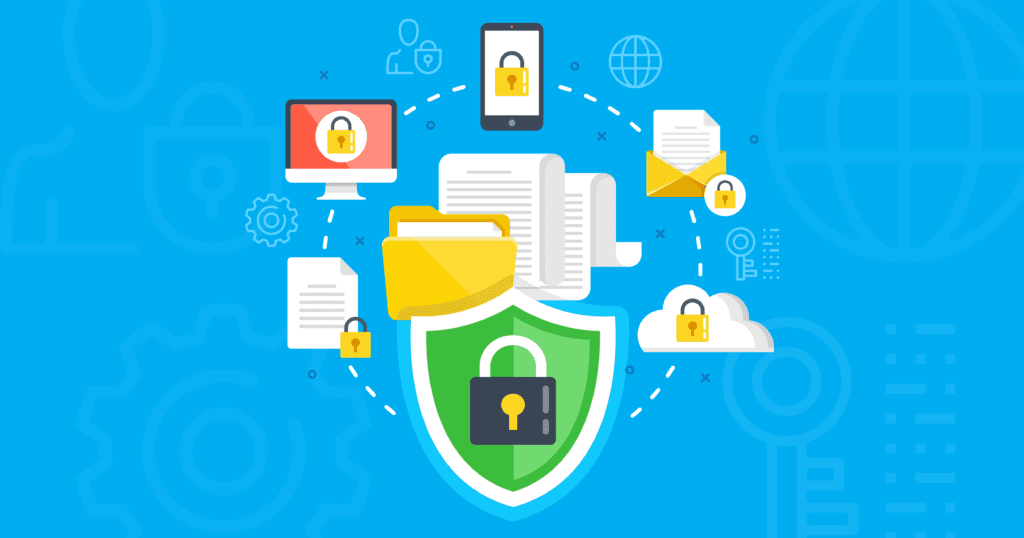
Image reference: https://tse2.mm.bing.net/th/id/OIP.WgR44BuaIWZBPVgwVXO03QHaHa?rs=1&pid=ImgDetMain&o=7&rm=3 


Monday, March 30, 2026

Customer Privacy

 Customer Privacy


Privacy is a major concern in an organization as it deals with personal data, which many may not want to share with others without their permission. These organizations gain personal data of their customers through various routes, most being from websites or documents they interact with on a daily basis. 

These organizations store the data in databases for future use to remember the specific details of each of their users. In today's world, many organizations tend to share or even sell their user data with 3rd parties such as data brokers. This user data is very valuable to these parties because they can create charts and reports based on each individual's behavior and potential decisions with minimum error, which they can then use to create advertisements that are intriguing to these users. 


The University of Belize is a prime example of an organization that gathers its customers' data, as it is a part of the education industry. The customer data comes from the various forms that newly graduated or returning students must fill out when applying for enrollment. This data comprises details such as each applicant's name and personal details. Example: Age, sex, contact information, and any referrals or education data needed to determine whether their past education meets their organization's standards.

This blog will dive deeper into the necessary privacy policies that these organizations should enforce when dealing with the personal data related to their customers and the reasons they should adhere to. It will also talk about what should be done regarding the personal emails and worksite monitoring of its customers.

UB students are given a unique email that they can use during their time as a student, which is needed to access a majority of the classes and platforms provided by the University.

The first privacy policy when it comes to utilizing User Email is that: 

1. Purpose of Email Accounts:

These accounts are considered institutional resources and must be used responsibly.

This would be the most important policy, as these emails are granted specifically for university use and not like private emails that can be used for anything the user wants to do.

The second policy is related to how these email accounts should be treated by the staff and administration of the organization. 

2. Privacy and confidentiality: The university is committed to protecting the confidentiality of all e‑mail communications. Access to user e‑mail content is restricted and only permitted when required for:

  • Security investigations

  • Legal compliance

  • System maintenance

  • Protection of university property

Any access must be authorized by designated university officials.

The 3rd policy states how users may access their emails and how to use them while active in their daily business. 

3. Acceptable Use

Users must not:

  • Share login credentials

  • Use UB e‑mail for illegal or harmful activities

  • Send spam, harassment, or unauthorized mass messages

  • Distribute confidential university information without permission

The 4th policy states how the administration should keep its users' gathered information safe and secure.

4. Data Protection 

UB implements security measures such as encryption, secure servers, and access controls to protect e‑mail data from unauthorized access.

Lastly is a policy that informs its users of what happens to the data gathered from them throughout the semesters or time with them.

5. Transparency

 The university will inform users of:
  • What data is collected?

  • Why is it collected?

  • How long is it retained?

  • Who may access it under approved circumstances?

It's this way that customers can have peace of mind and knowledge on what, where, or how their information will be dealt with.

The University of Belize's various campuses come with special buildings where users may access University owned computers to indulge in various tasks, from searching for information for assignments and projects to just browsing online, but to access these devices one normally needs to login with their user information of which depending on the purpose of the devices use would need a set of policies that don't go too far into the users privacy while still staying in a moderate zone of access.

The first policy would need to address why the organization is monitoring the use of the different websites a user can access while on their technology. As such, the 1st policy will state the 4 main reasons for the monitoring of user computer access.

1. Monitoring of University-Owned Devices

UB monitors activity on university‑owned computers, including login times, websites accessed, and system usage patterns. Monitoring is conducted to:

  • Protect the network

  • Prevent misuse

  • Ensure academic integrity

  • Maintain system performance

The second policy states why it's important that users use their verified credentials when accessing the computers on campus and how it helps the University.

2. Login Requirements

Students and employees must use their official UB credentials to access campus computers. Login data helps the university:

  • Verify authorized access

  • Track system usage for security

  • Investigate policy violations when necessary

The third policy reveals the limitations in place on what the University can see when users are active on their devices and what information they cannot see.

3. Limits of Monitoring

Monitoring is strictly limited to university systems and devices. UB does not monitor:

  • Personal devices

  • Off‑campus internet activity

  • Private social media accounts

  • Personal files stored on non‑UB equipment

The fourth policy shows users what they are expected to not do when using UB computers while on campus.

4. Appropriate Use of Campus Computers

Users must not use UB computers to:

  • Access illegal or harmful content

  • Attempt to bypass security controls

  • Install unauthorized software

  • Engage in academic dishonesty

The fifth policy states how the data gathered through each and every individual's access to the devices is handled. 

5. Data Handling and Retention

System logs and monitoring data are stored securely and retained only as long as necessary for:

  • Security

  • Compliance

  • Investigations

  • System improvement

Lastly, the sixth policy talks about the transparency between the organization and its users regarding the monitoring that takes place during device use.

6. Transparency and User Rights

UB will clearly communicate:

  • What is monitored

  • Why monitoring occurs

  • How monitoring data is used

  • How privacy is protected

Users have the right to request information about the university’s monitoring practices.

Conclusion

Protecting customer privacy isn’t just a legal requirement—it’s a commitment to trust, transparency, and ethical responsibility. As businesses collect more data than ever before, customers expect clarity about how their information is used, stored, and safeguarded. A strong privacy policy does more than outline rules; it demonstrates respect for the people behind the data. By prioritizing clear communication, responsible data practices, and ongoing compliance, organizations can build lasting relationships rooted in confidence and integrity. In a digital world where privacy concerns continue to grow, choosing to protect your customers’ information is choosing to protect your reputation and your future.

Image Reference: https://studentprivacycompass.org/wp-content/uploads/2021/09/FPFPrimerCoverGraphic-1-1024x538.png 

Done by: Christian Sabido, Aileen, Elia Cal, Amanda Roberts, Christina Moh

Employee Privacy

 Employee Privacy Employee privacy has become a central ethical concern for modern organizations, especially as workplaces rely more heavily...